Iain Mattaj awarded with the Medaglia Teresiana

Monday, the 16th – Director Iain Mattaj spoke as the distinguished lecturer at the inauguration ceremony of the 2019-2020 PhD academic year of the University of Pavia.
He was later awarded with the Medaglia Teresiana, the highest honor confered by the University of Pavia.
The university of Pavia was established as a Studium generale in 1361 and It has ranked among the leading research institutions in Italy and Europe. Famous scientists like Alessandro Volta (the inventor of the electrical battery) and Gerolamo Cardano (the founder of the studies on probability), lawyers like Cesare Beccaria (the 18th century advocate for the abolishment of death penalty), poets like Ugo Foscolo and Vincenzo Monti and – more recently – the Nobel Laureates Camillo Golgi (medicine), Giulio Natta (chemistry) and Carlo Rubbia (physics) spent most or part of their academic career in that University.
The Teresian medal was inspired by 18th century models and is offered to illustrious guests of the University. On recto of the medal is represented the coat of arms of the University, enclosed in the inscription “DCCCXXV Capitulare Lotharii – MCCCLXI Generale Studium constitutum“. In the cartouche there is the wording “Alma Ticinensis Universitas“; on the verso there is a refined modern version of the Palazzo del Piermarini with the wording “Athenae Insubricae restitutae MCMLIII. Athenaeum Ticinense scientiis, magistris, operibud suctum MDCCLXXII“.
Share:




You could also like:
-
HT National Facilities: One Year On, New Call Open
On 10 June, Human Technopole marks the one-year anniversary of the official opening of its National Facilities, a key milestone in our mission to support excellence in life sciences across Italy. Celebrating this important date, we are pleased to announce that the new Call for Access to the National Facilities is now open. Researchers can submit their proposals until 30 September 2025.
-
10 Fully Funded PhD Scholarships in Systems Medicine through SEMM
Human Technopole is offering up to 10 fully funded PhD scholarships through the SEMM PhD Program in Systems Medicine. These scholarships are open to talented and motivated graduates—both from Italy and abroad – interested in pursuing doctoral research.
-

Human Technopole Commitment to Gender Equality
Human Technopole is proud to announce the launch of its new Gender Equality Plan (GEP) for 2025-2027, a strategic initiative designed to further integrate gender equality across all aspects of the Institute, building upon the successful outcomes of the previous GEP (2022-2024). HT has also achieved the UNI/PdR 125:2022 certification, which recognizes organizations that promote gender equality and foster inclusive workplaces.
-

2 fully funded PhD fellowships at HT through SISSA
Human Technopole is offering 2 fully funded 4-year PhD fellowships to young scientists from the national and international community who wish to undertake a doctoral degree on a project focused on Computational Biology.
-
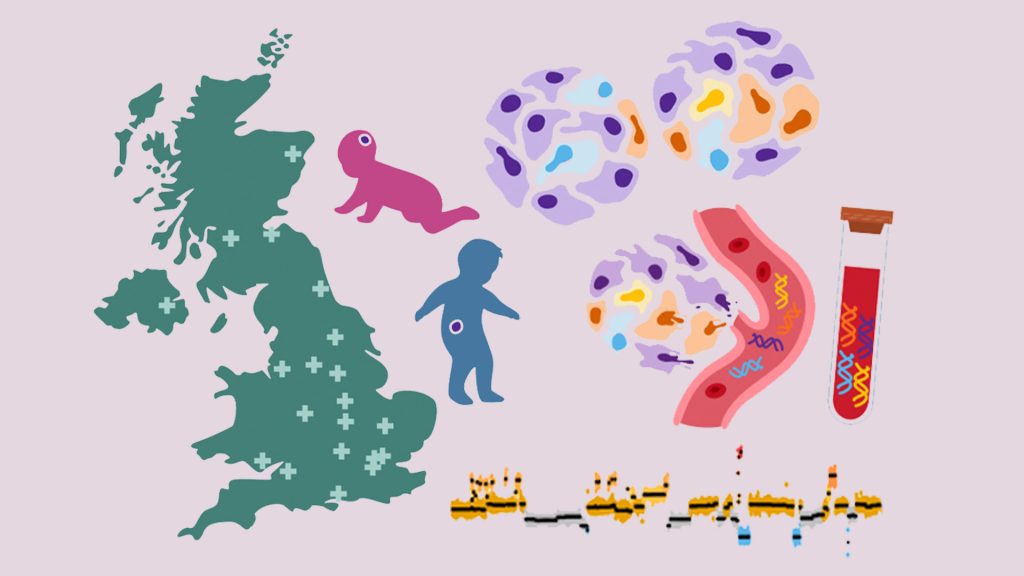
Childhood Cancer: Free DNA in Blood Reveals Therapy Resistance
An international study coordinated by Milan’s Human Technopole, the Institute of Cancer Research (ICR) in London, and the Royal Marsden Hospital in London has shown that certain DNA fragments found in the blood of paediatric cancer patients can be used as “biomarkers” to obtain information on the characteristics of the disease and its ability to resist therapies. Analysing these fragments could represent an effective alternative to tumour tissue biopsy, a practice that is particularly difficult in children.