National Facility for Genomics
The National Genomics Facility offers cutting-edge and innovative services in the field of genomics. Our mission is to develop robust experimental and analytical workflows to explore all major areas of genomic research. These include, but are not limited to, DNA and RNA analysis, study of chromatin structure, and the epigenetic mechanisms that regulate transcription.
Our goal is to utilize and apply advanced and innovative technologies to provide high-level analyses, supporting large-scale projects, population studies, tissue-level analyses, and single-cell studies. The National Genomics Facility is committed to enhancing genomic research in all its aspects, benefiting the entire Italian scientific community.
The National Genomics Facility is composed of four Infrastructure Units (IU):
- IU1 – High-throughput Sequencing: The primary goal of this Unit is to provide highly innovative high-throughput sequencing services. Specialized in high-quality genomic, transcriptomic, epigenomic and metagenomic analyses, it utilizes advanced protocols for sample processing with automated systems and next-generation sequencing (NGS) platforms.
- IU2 – Multi-omics Technologies: This Unit specializes in multi-omics technologies, offering cutting-edge services for single-cell multi-omics analyses and spatial transcriptomics, as well as sequencing based on long-read generation. It closely collaborates with the Tissue Processing Unit and the National Imaging Facility to implement spatial transcriptomics protocols.
- IU3 – Computational Genomics: Representing the computational core of the Facility, this Unit is dedicated to the development, implementation, and maintenance of automated pipelines for pre-processing and primary analysis of sequencing data. It works in close collaboration with the Data Handling and Data Analysis Facility, ensuring that the computational pipelines are state-of-the-art and tailored to the continuously evolving technological landscape of genomic research.
- IU4 – Technology Development: The team in this Unit is committed to the development of innovative methods and technologies. With highly qualified personnel, it focuses on evaluating new technologies and tools for optimizing and standardizing customized experimental protocols. The goal is to offer new innovative services to the scientific community and support the realization of proof-of-concept projects to promote technological development and transfer.
Open Call
25-G-ROUND2 - National Facility for Genomics
The call for Access for the National Facility for Genomics (Call ID: 25-G-ROUND2) is open from 1 June to 30 September 2025.
Details:
For general enquiries about the call: [email protected]
For technical enquiries about the services: [email protected]
Downloads:
Links:
Services
- Whole Genome Sequencing (WGS)
- Whole Exome Sequencing (WES)
- Amplicon sequencing for microbiome analysis (16S-ITS)
- Methylation sequencing (Methyl-seq)
- mRNA sequencing from standard and low input
- totalRNA sequencing from standard input
- smallRNA sequencing
- Single-cell 3’RNAsequencing or Single-cell gene Expression Flex (10X Genomics)
- Single-cell Immune profiling-VDJ (10X Genomics)
- Single-cell multiome ATAC + Gene expression (10X Genomics)
- Single-cell ATAC sequencing (10X Genomics)
- Visium Spatial gene expression from FreshFrozen or FFPE tissues (10X Genomics)
- GeoMx Digital Spatial Profiling from Fresh-Frozen, Fixed Frozen or FFPE tissues (Nanostring)
- Nanopore gDNA sequencing (long reads or ultra long reads)
- Nanopore small gDNA sequencing
- Nanopore direct RNA Sequencing
- Nanopore cDNA sequencing (bulk cDNA or single-cell cDNA from 10x Genomics protocol)
- Sequencing only with NovaSeq 6000 (Illumina)
- Sequencing only with NextSeq 2000 (Illumina)
- Sequencing only with MiSeq (Illumina)
Instruments
Technologies for Automated Samples/Libraries preparation

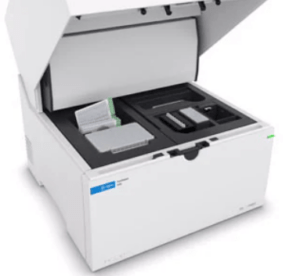 The 4200 TapeStation system is an automated electrophoresis tool for DNA and RNA sample quality control. Fully automated sample processing enables the analysis of size, concentration, and integrity. It provides a complete solution for sample quality control within any NGS or Biobank workflow.
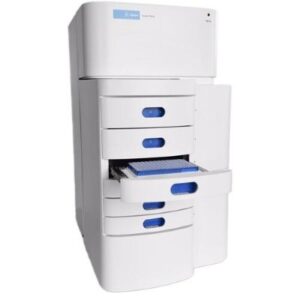 The Fragment Analyzer system utilizes automated parallel capillary electrophoresis to provide reliable and high sensitivity quality control (QC) for nucleic acids. Common QC bottlenecks are resolved by the automation of key steps such as gel loading and sample injection increasing lab efficiency.
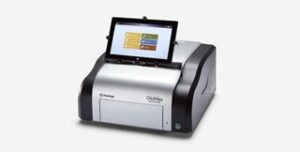 GloMax® Discover is a multimode plate reader that provides flexible use of filters and includes high-performance luminescence, fluorescence, UV-Visible absorbance, BRET and FRET, two-color filtered luminescence capabilities. It can be integrated into high-throughput automated workflows.
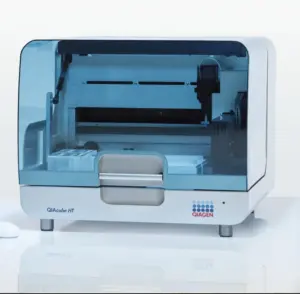 It is an Instrument for automated mid- to high-throughput nucleic acid purification in 96-well format.
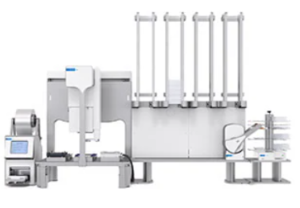 The Agilent Bravo NGS workstation is built on the Bravo automated liquid handling robot preconfigured for library prep and enrichment when using next-generation sequencing (NGS) protocols. A simple and intuitive interface enables users to quickly set up and run pre-programmed protocols.
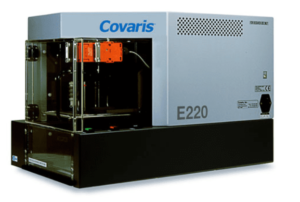 The E220 enables multi-sample, batch preparation, capable of processing a wide range of sample types and volumes. The E220 may be programmed to process from 1 to 96 samples in a single batch. For example, with 96 samples, 96 different AFA energies may be pre-programmed.
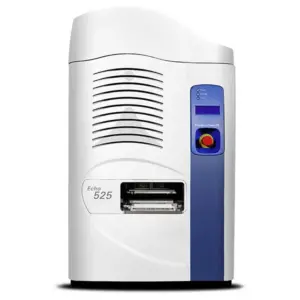 The Echo 525R Liquid Handler allows to transfer small, accurate, and precise amounts of samples and reagents to achieve miniaturized reaction volumes. The miniaturization of NGS library prep reduces reagents cost and the amount of sample input required, and at the same time increases throughput while providing high quality sequencing data.
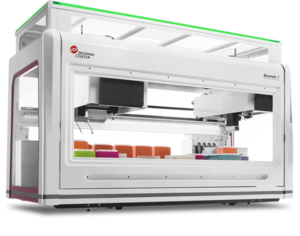 The Biomek i7 Automated Workstation has been designed to optimize dependability and walk-away time in mid- to high-throughput labs. The Biomek i7 can be equipped with up to 45 deck positions, include both Multichannel and Span-8 pipette heads and is able to transfer volumes from 0.5 µL to 5,000 µL. It can be integrated with the Echo Liquid Handler for volume miniaturization.
Technologies for High Throughput Sequencing

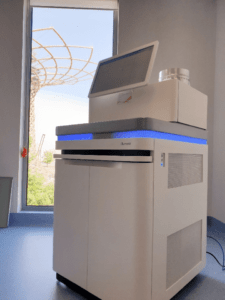 NovaSeq 6000 System is the most powerful Illumina sequencer. It leverages sequencing by synthesis (SBS) technology to deliver accurate data and performance and it incorporates patterned dual flow cell technology to generate an unprecedented level of sequencing throughput (6000 Gb) and applications.
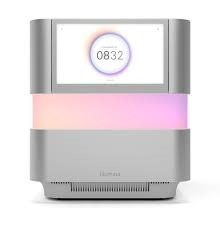 The NextSeq 2000 System is a highly flexible and scalable benchtop system that generated up to 360 Gb per run. It supports a broad range of standard mid-throughput NGS methods such as exome sequencing, target enrichment, single-cell profiling and transcriptome sequencing as well as emerging techniques, including spatialomics. It allows a rapid, accurate, on-cloud or on-board data analysis.
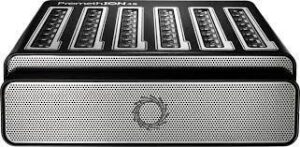 PromethION 48 is a high-throughput Nanopore sequencing device using the single molecule sequencing technology and massively paralleled. It allows up to 48 sequencing experiments to be run concurrently or individually, delivering yields of up to 9,600 Gbases.
Technologies for Single-cell RNA Sequencing and Spatial Multiomics
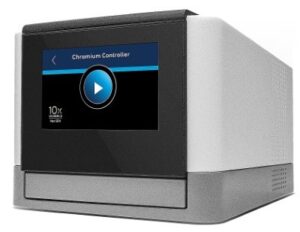 The Chromium Controller uses advanced microfluidics to perform single cell partitioning and barcoding in a matter of minutes. Powered by Next GEM technology, the Chromium Controller enables integrated analysis of single cells at massive scale allowing the discovery of gene expression dynamics and molecular profiling of individual cell types. Chromium Controller runs low- and standard-throughput assays.
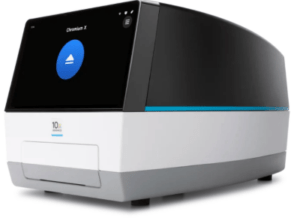 Chromium X can analyse hundreds to hundreds of thousands of cells in a single run, making million cell studies routine and large-scale studies more affordable and practical. Chromium X is compatible with all 10x current single cell assays, including low-, standard- and high-throughput. With the high-throughput assay, it is possible to target up to 20,000 cells/nuclei per individual reaction or up to 60,000 cells/nuclei when using multiplex reagents.
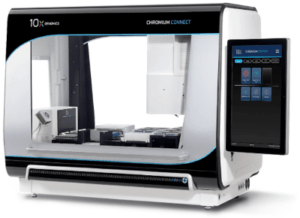 The Chromium Connect is a system that combines proprietary 10x microfluidics technology using the Chromium Automated Controller with precise, automated liquid handling that allows users to run 10x Genomics end to end library construction workflow with minimal user interaction.
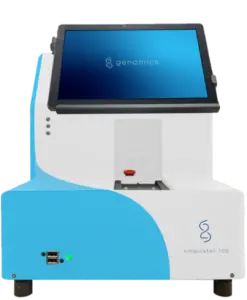 The benchtop Singulator System enables reproducible, rapid and hands-off dissociation of a wide range of tissues into single-cell or nuclei suspensions with walk-away operation. Suspensions of nuclei or high-viability cells can be obtained for a wide range of single-cell analyses. Its ability to perform cold dissociation minimizes the expression of stress-related genes in cells and helps preserve RNA quality in nuclei.
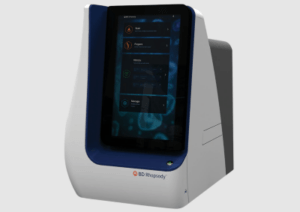 The BD Rhapsody™ Single-Cell Analysis System enables single-cell capture and barcoding of hundreds to thousands of single cells for analysis of genomic and proteomic information, using proprietary, gentle, robust microwell-based single-cell partitioning technology.
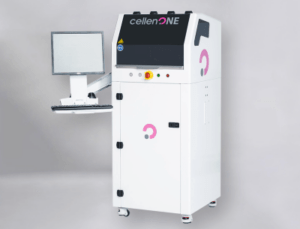 cellenONE® F1.4 is based on multi-fluorescence image-based single-cell sorting technologies and allows detection and imaging of fluorescent markers excited by up to 4 different light sources. It allows sorting and gentle dispensing of any biological active compounds and cells.
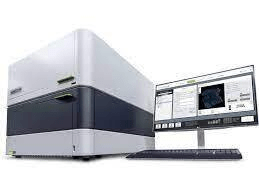 The GeoMx Digital Spatial Profiler (DSP) provides morphological context in spatial transcriptomics and spatial proteomics experiments from just one slide. From discovery to translational research, the GeoMx DSP is the most flexible and robust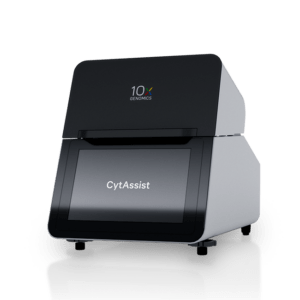
Facility Members
-
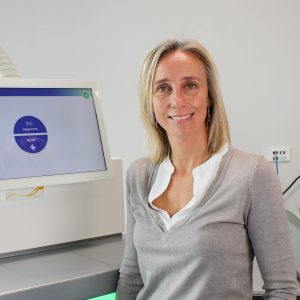 Clelia Peano
Head of National Facility for Genomics -
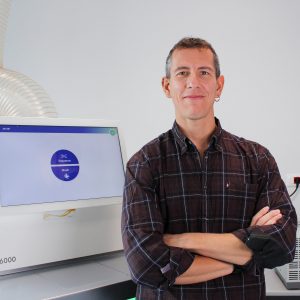 Niccolò Alfano
Senior Technician -
 Daniel Carrillo Bautista
Bioinformatic Technician -
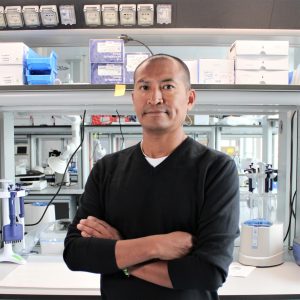 Javier Cibella
Technician -
 Carola Maria Conca Dioguardi
Scientific Project Manager -
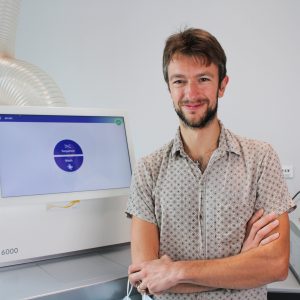 Paolo Ferrari
Senior Technician -
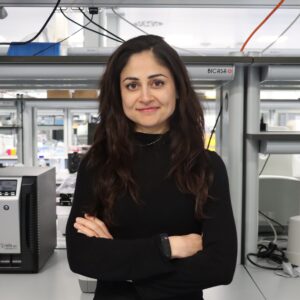 Francesca Giannese
Senior Manager -
 Luigi Antonio Lamparelli
Bioinformatician -
 Rossana Piccioni
Senior Technician -
 Alessandra Pirola
Senior Technician -
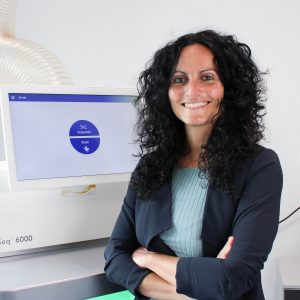 Eugenia Ricciardelli
Senior Technician -
 Luca Rotta
Senior Manager -
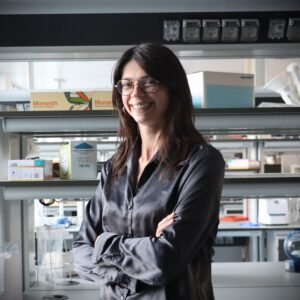 Giulia Sabbatinelli
Technician -
 Fabio Simeoni
Automation Expert -
 Mariateresa de Cesare
Senior Technician