Kalebic Group
The neocortex is the part of brain involved in a variety of higher cognitive functions, including language. During human brain evolution, the neocortex underwent a dramatic expansion, which is considered to be the basis for the unparalleled cognitive abilities of humans. Cognitive impairments often result from altered size or shape of the neocortex, which in turn are caused by defects in the proliferation of neural stem cells in the early stages of brain development. In the adult brain, the same developmental pathways can be hijacked by cancer cells allowing them to proliferate. However, we still understand very little about the mechanisms that are at the basis of those processes.
The research of the Kalebic Group focuses on the molecular and cell biological mechanisms underlying human neocortical development and its implications for neurodevelopmental disorders and brain cancers. In the context of neurodevelopment, we are studying molecular and cellular characteristics of neural stem cells whose impairment results in an alteration of the neocortical size and shape, which can lead to intellectual disabilities, such as Down syndrome. In the context of brain cancers, we are interested in the molecular and cell biology of glioblastoma stem cells to identify new targets associated with the cancer proliferation and invasiveness.
Our Group takes a multidisciplinary approach across biological scales, combining cutting-edge molecular and genetic techniques, CRISPR/Cas9 genome editing, advanced live imaging and computational tools. We apply these techniques to a variety of model systems, including human primary samples, cerebral organoids and animal models.
For informal enquiries please contact [email protected].
PHOTO:
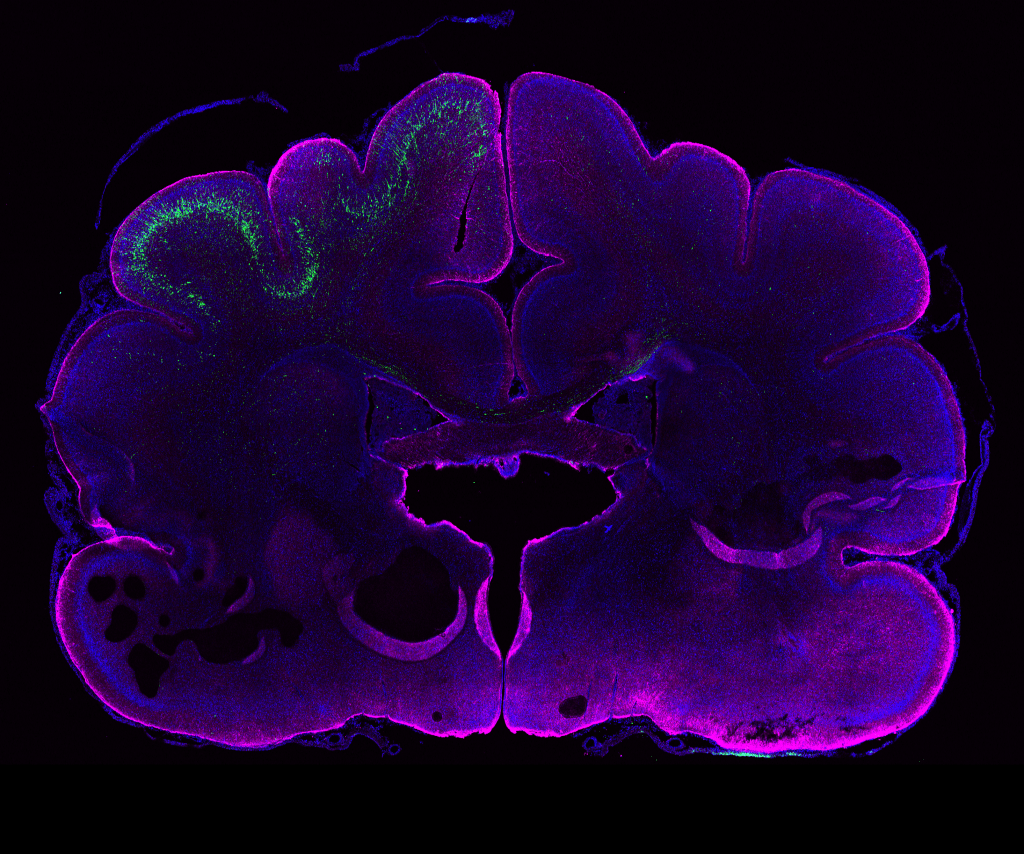
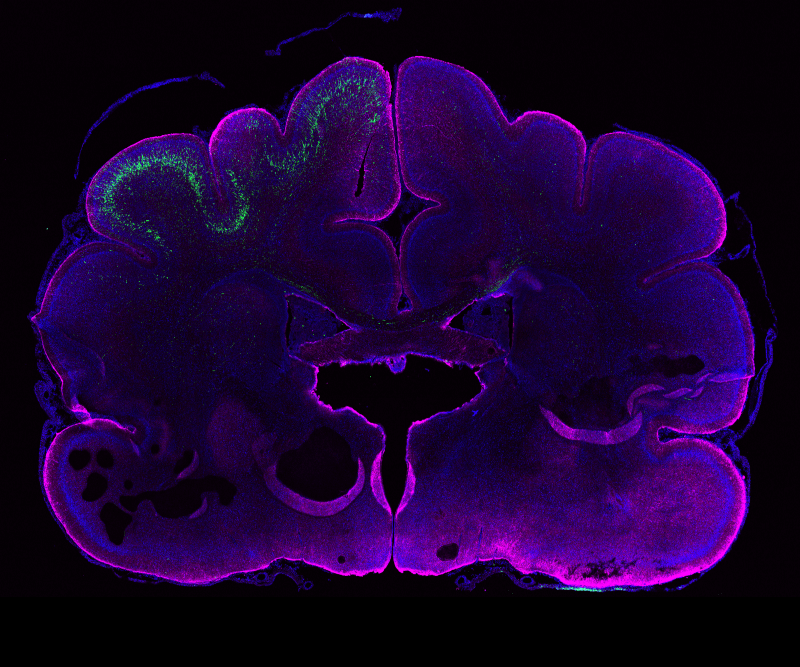
Genetic manipulation in the ferret brain (age: postnatal day 16). Neural stem cells in the left hemisphere were electroporated in vivo 24 days earlier. GFP+ neurons (green) have their cell bodies in the electroporated hemisphere and extend their processes to the contra-lateral hemisphere. Magenta, GFAP (glial cell marker); blue, DAPI (nuclei).
Image from: Kalebic et al., eLife 2018;7:e41241.
Group members
-
 Nereo Kalebic
Research Group Leader -
 Negin Alizadehmohajer
Postgraduate Fellow -
 Carlotta Barelli
PhD Student -
 Ilaria Bertani
Senior Research Technician -
 Alberto Campione
PhD Student -
 Emanuele Capra
PhD Student -
 Nikola Cokorac
PhD Student -
 Stefania Faletti
Postdoc -
 Mewhanti Flaminia Kaluthantrige Don
Postdoc -
 Michela Passi
Postgraduate Fellow -
 Lucas Van Endert
Postgraduate Fellow
Publications
-
05/2020 - Journal of Visualized Experiments
In Vivo Targeting of Neural Progenitor Cells in Ferret Neocortex by In Utero Electroporation
Presented here is a protocol to perform genetic manipulation in the embryonic ferret brain using in utero electroporation. This method allows for targeting of neural progenitor cells in the neocortex in vivo.
 Previous page