Human Technopole signs an agreement with the University of Naples Federico II
In these days we have finalised the agreement with the University of Naples Federico II that will allow the implementation of many synergies. In particular, the agreement allows for the exchange of research staff at all levels and the development of collaborative projects in areas of common interest. Moreover, the involvement in training activities and the development of joint seminars, symposia and workshops will be promoted.
At Human Technopole we want to contribute to the progress of the country, acting as a reference point for the Italian scientific community, and we are committed to raising the profile of the Italian biomedical community through partnerships and collaborations with national and international subjects.
For these reasons, we have signed several MoUs and created strategic partnerships with authoritative realities in the field of life sciences. We are Associate Partners of LifeTime, the pan-European research initiative that aims to revolutionize health care through the understanding and monitoring of single-cell resolution human diseases to transform patient care and the sustainability of health systems. We collaborate with the Department of Biology of the University of Rome “Tor Vergata” to continue the development of MINT and SIGNOR, two databases that over time have become fundamental resources for the European bioinformatics community and we have signed an MoU with the National Life Science Technology Cluster Alisei (Advanced Life Science in Italy) and with the CL.uster A.grifood N.azionale (CL.A.N) in order to develop and promote the life sciences and agri-food sectors at national and international level. Finally, we have a framework agreement with the University of Milan and we are involved in the PhD program of SEMM (European School of Molecular Medicine), becoming a host institute for the PhD program in Systems Medicine.
Share:




You could also like:
-
HT National Facilities: One Year On, New Call Open
On 10 June, Human Technopole marks the one-year anniversary of the official opening of its National Facilities, a key milestone in our mission to support excellence in life sciences across Italy. Celebrating this important date, we are pleased to announce that the new Call for Access to the National Facilities is now open. Researchers can submit their proposals until 30 September 2025.
-
10 Fully Funded PhD Scholarships in Systems Medicine through SEMM
Human Technopole is offering up to 10 fully funded PhD scholarships through the SEMM PhD Program in Systems Medicine. These scholarships are open to talented and motivated graduates—both from Italy and abroad – interested in pursuing doctoral research.
-

Human Technopole Commitment to Gender Equality
Human Technopole is proud to announce the launch of its new Gender Equality Plan (GEP) for 2025-2027, a strategic initiative designed to further integrate gender equality across all aspects of the Institute, building upon the successful outcomes of the previous GEP (2022-2024). HT has also achieved the UNI/PdR 125:2022 certification, which recognizes organizations that promote gender equality and foster inclusive workplaces.
-
2 fully funded PhD fellowships at HT through SISSA
Human Technopole is offering 2 fully funded 4-year PhD fellowships to young scientists from the national and international community who wish to undertake a doctoral degree on a project focused on Computational Biology.
-
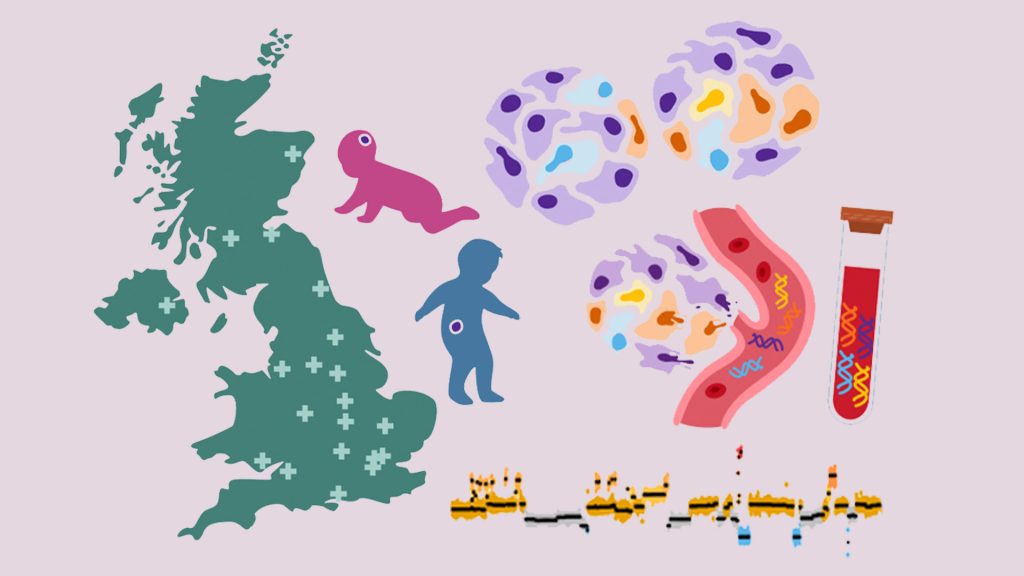
Childhood Cancer: Free DNA in Blood Reveals Therapy Resistance
An international study coordinated by Milan’s Human Technopole, the Institute of Cancer Research (ICR) in London, and the Royal Marsden Hospital in London has shown that certain DNA fragments found in the blood of paediatric cancer patients can be used as “biomarkers” to obtain information on the characteristics of the disease and its ability to resist therapies. Analysing these fragments could represent an effective alternative to tumour tissue biopsy, a practice that is particularly difficult in children.