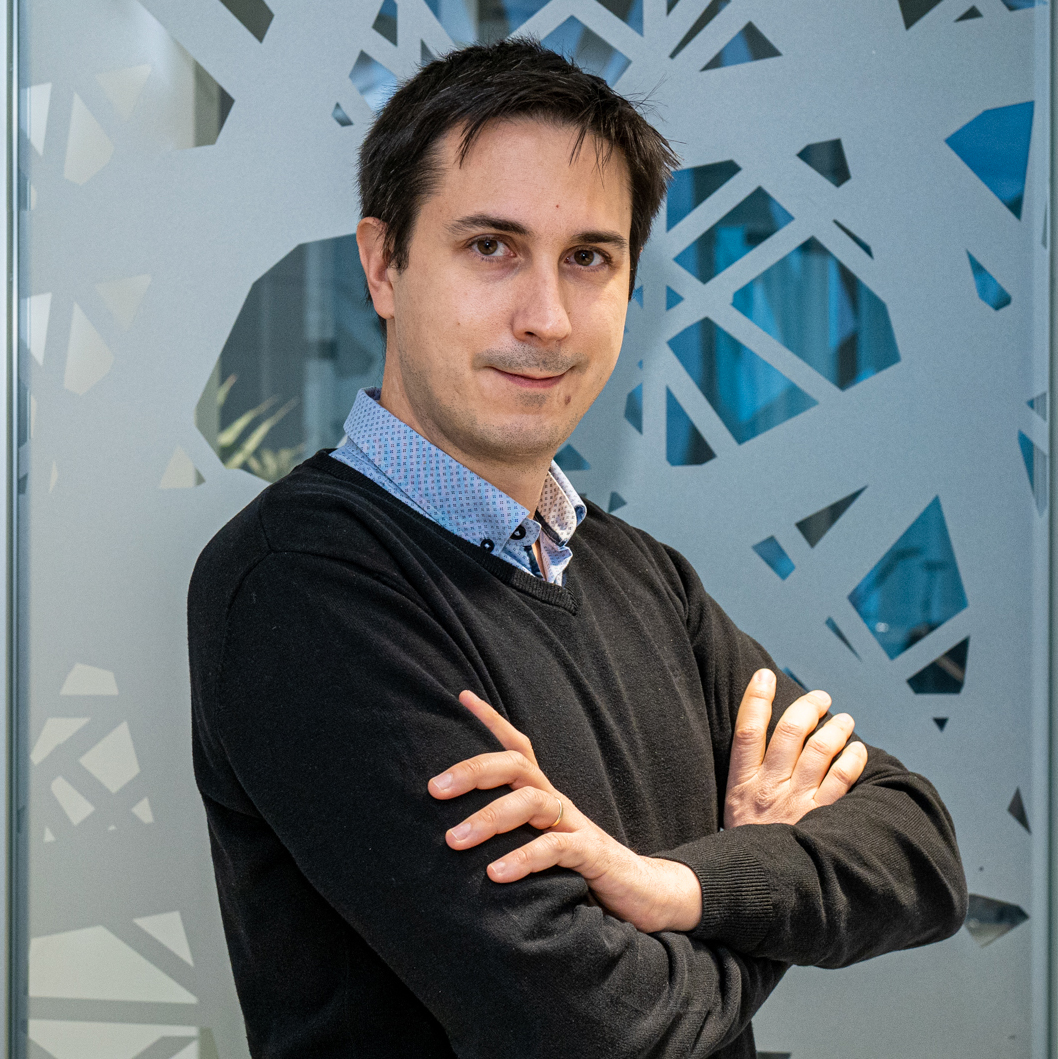
Nereo Kalebic
- Research Group Leader, Kalebic Group
Nereo Kalebic è un Group Leader presso il Centro di Neurogenomica. Ha conseguito la laurea in Biologia Molecolare presso l’Università di Zagabria in Croazia nel 2007. Nel 2012 ha completato il dottorato in Biologia Molecolare presso il Laboratorio Europeo di Biologia Molecolare (EMBL) e l’Università di Heidelberg. Durante il dottorato, Nereo ha studiato il ruolo delle modificazioni post-traduzionali dei microtubuli nello sviluppo e nella funzione del sistema nervoso. Dal 2013 al 2019 ha svolto ricerche post-dottorato nel gruppo di Wieland Huttner presso il Max Planck Institute of Molecular Cell Biology and Genetics di Dresda studiando lo sviluppo e l’evoluzione della neocorteccia umana. L’attuale ricerca di Nereo si concentra sui meccanismi biologici molecolari e cellulari alla base dello sviluppo della neocorteccia umana e sulle sue implicazioni per l’evoluzione umana e i disturbi del neurosviluppo.
Email: nereo.kalebic[at]fht.org
Contatti
Segui

Pubblicazioni
-
11/2024 - Life Science Alliance
Morphoregulatory ADD3 underlies glioblastoma growth and formation of tumor–tumor connections
Glioblastoma is a major unmet clinical need characterized by striking inter- and intra-tumoral heterogeneity and a population of glioblastoma stem cells (GSCs), conferring aggressiveness and therapy resistance. GSCs communicate through a network of tumor–tumor connections (TTCs), including nanotubes and microtubes, promoting tumor progression. However, very little is known about the mechanisms underlying TTC formation and […]
-
09/2024 - Nature Methods
Serialized on-grid lift-in sectioning for tomography (SOLIST) enables a biopsy at the nanoscale
Cryo-focused ion beam milling has substantially advanced our understanding of molecular processes by opening windows into cells. However, applying this technique to complex samples, such as tissues, has presented considerable technical challenges. Here we introduce an innovative adaptation of the cryo-lift-out technique, serialized on-grid lift-in sectioning for tomography (SOLIST), addressing these limitations. SOLIST enhances throughput, […]
-
06/2023 - EMBO Reports
DOT1L activity affects neural stem cell division mode and reduces differentiation and ASNS expression
Cortical neurogenesis depends on the balance between self-renewal and differentiation of apical progenitors (APs). Here, we study the epigenetic control of AP’s division mode by focusing on the enzymatic activity of the histone methyltransferase DOT1L. Combining lineage tracing with single-cell RNA sequencing of clonally related cells, we show at the cellular level that DOT1L inhibition […]
-
09/2022 - Science
Human TKTL1 implies greater neurogenesis in frontal neocortex of modern humans than Neanderthals
INTRODUCTION The evolutionary expansion of the neocortex and the concomitant increase in neuron production are considered to be a basis for the increase in cognitive abilities that occurred during human evolution. Endocast analyses reveal that the endocranial volume of modern humans and Neanderthals was similar, suggesting similar brain and neocortex size. But whether similar neocortex […]
-
06/2022 - Frontiers in Cell and Developmental Biology
Forebrain Organoids to Model the Cell Biology of Basal Radial Glia in Neurodevelopmental Disorders and Brain Evolution
The acquisition of higher intellectual abilities that distinguish humans from their closest relatives correlates greatly with the expansion of the cerebral cortex. This expansion is a consequence of an increase in neuronal cell production driven by the higher proliferative capacity of neural progenitor cells, in particular basal radial glia (bRG). Furthermore, when the proliferation of […]
 Previous page