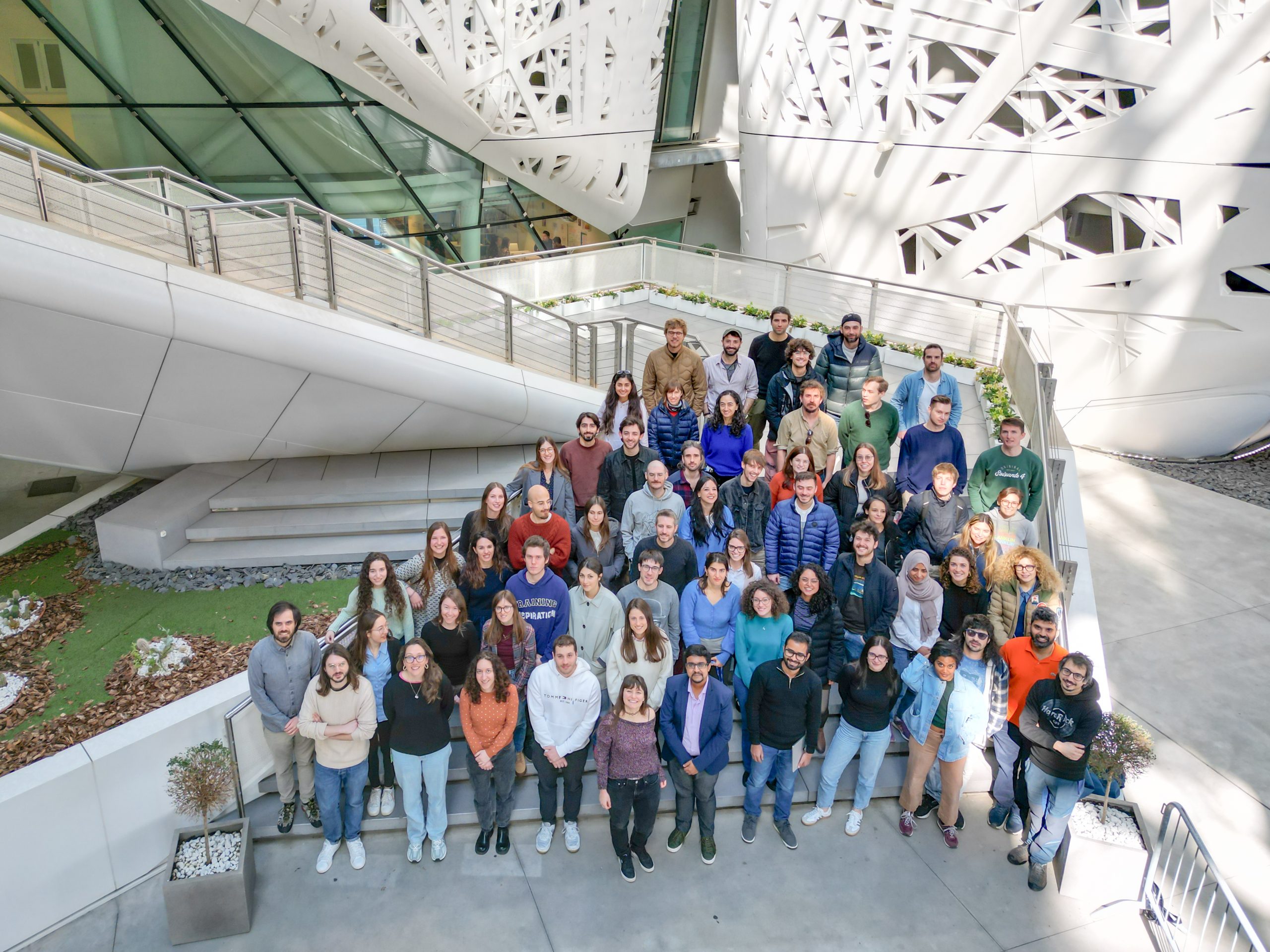
HT PhD Student & Postdoc Symposium 2025: “Research in Motion”
After the success of its inaugural edition, which gathered over 100 participants, the HT PhD Student & Postdoc Symposium returns for its second year on 30 September 2025. Join us in supporting the future of life sciences. Every contribution can make a difference!

Cancer, insomnia, ancient DNA: over 100 projects from Italian scientists at HT
Human Technopole has presented 102 research projects that were the first to benefit from the cutting-edge equipment of the National Facilities — the advanced technologies that the Institute makes available to external researchers from across Italy. The majority of studies focus on cancer and neurodegenerative diseases, accounting for 50% of the selected projects. The announcement was made this morning in Milan during “Open HT – The Open Day on Life Sciences”, an event designed to showcase Human Technopole’s achievements and outline future goals.

PhD Opportunity in Data Science for Medicine
Human Technopole is looking for a curious, driven, and collaborative PhD candidate to join the Research group lead by Fernanda Pinheiro as part of the EU-funded ENDAMR (Exploring Novel Drivers of Antimicrobial Resistance), a Marie Skłodowska Curie Actions (MSCA) Doctoral Network. This PhD project will develop mechanistic models grounded on microbial physiology to understand how interactions among mutually dependent bacteria influence antibiotic tolerance, community-level perturbations and evolutionary trajectories toward antimicrobial resistance.
10 Fully Funded PhD Scholarships in Systems Medicine through SEMM
Human Technopole is offering up to 10 fully funded PhD scholarships through the SEMM PhD Program in Systems Medicine. These scholarships are open to talented and motivated graduates—both from Italy and abroad – interested in pursuing doctoral research.

Shedding light on the molecular mechanisms of Gabriele-de Vries Syndrome
Using advanced stem cell models, Human Technopole researchers show how mutations in the YY1 gene cause widespread dysregulation of genes crucial for brain development in multiple cell types, leading to structural abnormalities and impaired neuronal function. The results of the research are published in the Nature Portfolio journal Molecular Psychiatry.
 Previous page